
ANALOG CCTV
Though most of our attention these days is focused on the transition to IP video technology, it’s important to note that analogue CCTV solutions can still be highly effective for many surveillance applications, especially those on a budget. With traditional CCTV, the video signal is processed and transmitted in analogue format for local viewing from one central monitoring location. But that doesn’t mean you can’t use analogue cameras in an IP-based surveillance environment. Using IP video encoders and other equipment such as digital video recorders and hybrid DVRs makes it possible to leverage your existing analogue cameras while migrating into the world of digital surveillance.
Subscribe Now To Get More Information
PROS AND CONS OF ANALOG SURVEILLANCE
These days, there’s a lot to think about when putting together a video surveillance system. And the first question on most people’s minds is “Do I go with traditional analogue cameras, or IP network cameras?” There are pros and cons to both choices. Let’s focus our attention on analogue CCTV cameras.
Pros of analogue CCTV
Lower initial cost – In most cases, analogue cameras cost less up front than IP network cameras.
Wide-spread compatibility – Mixing and matching camera models and surveillance equipment form different manufacturers is easy with an analogue CCTV setup.
Lower initial cost – Analogue cameras tend to handle low-light situations better than IP cameras on average, though IP camera technology is improving in this regard.
Cons of analogue CCTV
Expensive cabling – For large-scale surveillance applications, analogue cameras require complicated cabling schemes that can be quite expensive and also challenging to install.
Limited features – Many of the advanced features now available with IP cameras (for instance: megapixel resolution, digital zoom, and video analytics), aren’t available in analogue CCTV models.
HIGH SECIRUTY ACCESS SYSTEM
Whether your project requires high security, full-height or waist-height turnstiles, or matching ADA accessible gates, PAIS is the secure choice. And, we’re experienced in access control systems from card readers to biometric scanners, to give you the power to control access. Our turnstile and gate products will integrate with virtually any access control system. Turnstiles, gates and railing systems provide effective means for pedestrian flow control at entrances of production facilities, administrative buildings, company offices, schools, university campuses, stadiums, leisure and fitness facilities, amusement parks and zoos, shopping outlets. PAIS provide a wide range of turnstiles, gates and railings to meet various requirements to design, size and level of security. Integrated with access control systems, these high quality entrance control products can provide a level of security to meet even the most exacting requirements.
In case of an emergency the wicket gate or turnstile can be unblocked with a mechanical unlock key. Optionally tripod turnstiles can be equipped with anti-panic folding barrier arms enabling to free the passageway in case of emergency without use of any specific keys or tools. To form passageways of any required configurations and make an entrance design complete, PAIS turnstiles and gates can be installed together with matching railings of different types. Thanks to the low power demand, the turnstiles are supplied with safe operating voltage
COMPONENTS OF A CCTV SYSTEM
There’s a lot that goes into a successful CCTV installation. While the cameras get most of the attention in the beginning, you also have other concerns, such as viewing, recording, and archiving the video footage, and the equipment required for carrying out those tasks. Here’s a look at the basic components of a typical CCTV system.
Cameras
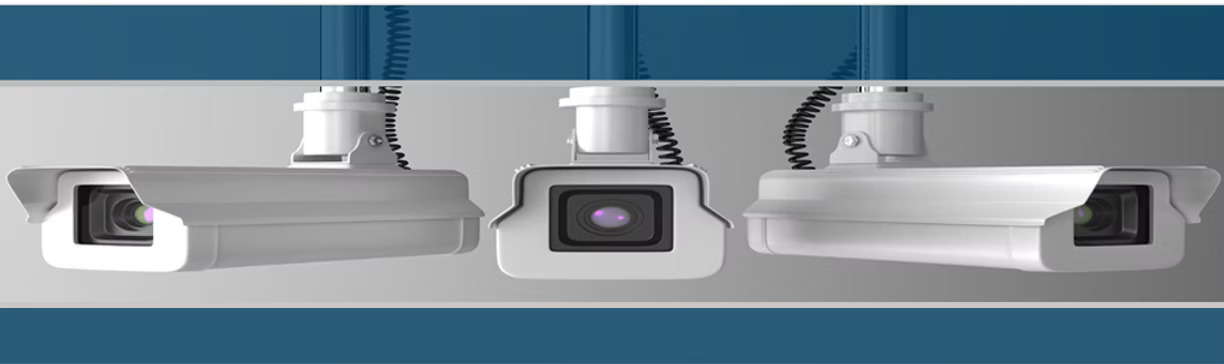
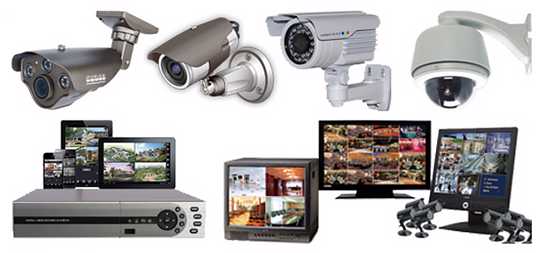
Security cameras are the starting point for most CCTV systems. There are endless possibilities when choosing CCTV cameras and lenses – everything from fixed models designed for monitoring very specific locations, to day/night cameras, and powerful PTZ domes for patrolling large areas.
Monitor
In a traditional CCTV setup, operators view footage from a central location on a monitor very much like a TV, but with higher lines of resolution for better picture quality. Monitors can be dedicated (meaning they display video from a single camera), or call-up (meaning operators can access multiple cameras at the same time).
Cable
With an analogue system, coaxial cable is required for transmitting video footage from the cameras. This is one of the drawbacks of analogue CCTV, as the cable can be expensive and difficult to install, especially for larger camera networks, and those were cameras must be positioned in difficult locations.
DVR
Most modern CCTV systems incorporate DVRs (digital video recorders) which enable operators to reap some of the benefits of a network-based surveillance setup. DVRs convert the analogue footage to digital, which helps to extend storage capacity, makes it much easier to search archived footage, and also allows users to stream video over a network for remote viewing from multiple locations.
Products & Service
- Fiber Optic
- Structured Cabling
- Telephone Systems
- Data Centre Services
- Wireless Solutions
- Active Equipment
- Access Control System
- Security & Surveillance
- Equipments
Built on Trust & Quality
- ISO Certified Company
- Experienced & Skilled Team
- On-Time Project Delivery
- Quality Assured Solutions
- Free Site Survey & Consultation
- After Sales Support & Maintenance


Your gateway to a internet connected world
INTERNET
Smart tv
INTERNET + TV
What are the installation fees for broadband service
Frequently Ask Questions
01
Q1. What services does Pan Arabia offer?
02
Q2. Where is Pan Arabia located?
03
Q3. Is Pan Arabia an ISO certified company?
04
Q4. How can I get a quote for my project?